Friday, February 28, 2014

Patterns...A Way to Teach "Smarter, Not Harder!"

One of the most powerful skills in increasing fact fluency and numerical flexibility is pattern recognition.  I know, it seems really simple...almost TOO simple.  However, there is a tremendous amount of power in it. Recognizing patterns can help students to:
  • Develop true place value understanding (think about the 0-99 chart).
  • Take ownership of what they discover, and therefore make sense of number.
  • Think critically about number, and make reasonable predictions and conjectures.
  • Start to discover and understand properties (which is super important, especially later on)..
  • Have fun!
If this isn't enough, the use of patterns is an essential part of our practice standards!  So actually, it's a Common Core-based expectation...  
  • SMP 7: Look for and make use of structure.  Mathematically proficient students look closely to discern a pattern or structure. 
  • SMP8: Look for and express regularity in repeated reasoning.  Mathematically proficient students notice if calculations are repeated, and look both for general methods and for shortcuts.
Here are some ways you can use patterns with your students
  • Post and use the 0-99 chart.
  • Skip count on a regular basis.  
    • Mrs. Schoening makes it a regular practice to have her students to count by different increments such as 3, 5, 6, etc.  She found that her students began to make the connection between their frequent skip counting and multiplication.  This made achieving fact fluency easier for them AND her!
    • Students can "line up" in different increments, or even number their papers for example in increments of four.
    • While waiting in line, or during transition, you can call out a number, and the students start to tell you the next numbers in succession!
  • Use number lines to count forward/backward, add/subtract, multiply/divide, show fractions, etc.  See the example below?
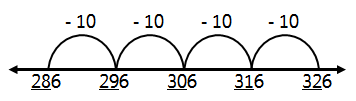
  • Algebraically (either without numbers, or with missing parts)
The possibilities are ENDLESS!  Try patterning, and let me know how it works!

FREEBIE:  Here is a cute link to a St. Patrick's Day patterning activity.  It comes from The Math Coach's Corner.  Enjoy!

Friday, February 14, 2014

A Better Way to Use Flashcards...

"Since Common Core has changed the way we do math, what are we going to so with all these Flashcards?!?!?"  I've been asked this question by countless teachers, parents, etc. At first, my response was, "THROW THEM AWAY!"  

Then, the mom in me chimed in. I hate waste.  It actually pains me. So, I was sure many of the people who had loads of Flashcards felt the same way about throwing away their Dollar Store investments.  So, I decided to research alternatives. 

So, I began to read. I came across Fluency With Basic Addition by Gina Kling. Very good, quick, easy read.  She suggests using flash cards to allow students to do a strategy sort. Students would group their flash cards according to the strategy they would use to find the answer.  This allows students to identify patterns.  It also encourages meta cognition. 

I tried it with a first grader.  She grouped them by doubles, 1 more, no more, and near doubles. It worked!  Try it for yourself and share your thoughts. 

Monday, February 3, 2014

Conversations that Count (Literally)!

There's this two-teacher team in my building.  At first glance, it looks like a regular co-teaching environment.  But when you crack the door open to listen to what's going on, that's when the magic happens.  Their students are decomposing and composing numbers, discussing strategies, freely using their Rekenreks, and having plain old mathematical discussions.

They talk all the time.  As a matter of fact, most of the time, all you hear is talking. They love to come to the carpet.  They enjoy strategy collaboration and think-pair-share.  Number Talks are their favorite.   It's never quiet in there.  However, there is power in their talking.  Because of their conversations, they are developing numerical flexibility.  They are becoming confident mathmeticians. 

This little class has "Mathematical Swag," and I love it.  Keep it up, Ms. Parker and Mrs. Scott.  Your students will never forget their experiences and will one day thank you.  Let's talk more in math.  Our students need it. 
 
Ms. Parker's First Grade Class has "Mathematical Swag."

Friday, January 17, 2014

I'm Baaaaaaaack! Reflections From a Semester Ago & Goals

Okay...I've been gone for a little while. A long while, I guess (according to the "Blogosphere").  I have been swamped with school, home, work, and just STUFF.  This leads me to my entry for today. With the hustle and bustle of school, home, career and life in general, I have been reminded of a few things that I believe are true when it comes to instruction as well.

1. Slower is always faster.  
2. Less is more.
3. Stick with the attainable.

This past semester was a tremendous learning experience for me as a math coach.  I've done my best to provide the best support possible to my teachers, while growing in the process.  A couple of times, I would get distracted with additions to my "to do" list, but overall, I believe that I have done a better job of keeping what is truly important (teacher empowerment and student achievement) at the forefront.  I have consistently supported teachers through collaborative planning, instructional updates, job-embedded professional learning, achievement-driven student initiatives, and just plain old coaching.  I have been blessed to be able to attend many professional learning sessions myself.  Some of my major accomplishments were:

  • Becoming fully credentialed with the GloSS and IKAN assessment, while facilitating this effort at me school
  • Developing a "Coaches' Cohort" support group for new teachers
  • Completed a professional learning module on Cognitively Guided Instruction
  • Found an effective way to offer teacher teams instructional updates through my "Coaches' Corner"
  • Facilitated job-embedded professional learning efforts to allow teachers to observe one another's instruction
  • Worked on the Georgia Formative Assessment Item/Data Review
  • Made meaningful upgrades to our school's math assessment, and calibrated these efforts
  • Continued with Math Corner, Math Minute, First in Math promotions, etc.
  • Started this blog!

This semester, I hope to keep learning and growing as an instructional coach, offer consistent mad meaningful professional learning to teachers, continue to empower teachers, and FINALLY defend my dissertation (which happens to be about instructional coaching).  I am proud of the strides we have made at my school, and I look forward to seeing what lies on the horizon.  

Thursday, November 7, 2013

iPad Apps for the Classroom

Here is a list of iPad applications for the classroom.  Virtual Manipulatives and Math Squared are my favorites for the primary grades.  Enjoy, and "Keep Calm and Do the Math!"
iPad Links for the Classroom 

Friday, November 1, 2013

Uh Oh...She's Drinking the Kool-Aid Too!

Shout out to Ms. Tiffany Jackson!  She is a 2nd grade teacher at my school.  I caught her drinking the "Math Kool-Aid" in big gulps!  Her students are studying Native Americans in their social studies unit.  So, she decided to integrate what they were learning about the Creek and Cherokee into her math centers.  She created some great problems for students to solve.

Notice how she listed names of actual crops planted and utilized by these Georgia Natives?  So actually, these problems are actually similar to real-life scenarios these people would have had many years ago.  This is really rich instruction.  With her permission, I am sharing them below.  Thanks, Tiffany for giving our students quality learning experiences!  

The Celebration
A Native American family of  16 need to plan for a celebration.  They need enough corn, potatoes, and melon to feed everyone.  There should be one ear of corn for each person, 1 potato for each person, and 3 people can share a melon.  How much food should be prepared?

On the Hunt!
Cherokee Native Americans hunt and fish to get many of the things they need.  They trade some of the things from their hunt to get other things they need.  During one week, 5 hunting mates traded 65 deer, 8 elk, and 137 salmon and trout.  What information do you not need to solve this problem?  How many non-fish items did they trade?  How many items did they trade in all?  
*Challenge:  If each hunting mate had the same number of things to trade from this list, what could each person have individually to trade?   

Instructional Tip:  To help students to really make sense of the math, provide manipulatives for them to use as they reach a solution.  Encourage them to solve using pictures, numbers, and words.  

Here's a picture of Mrs. Jackson's Mathematicians!